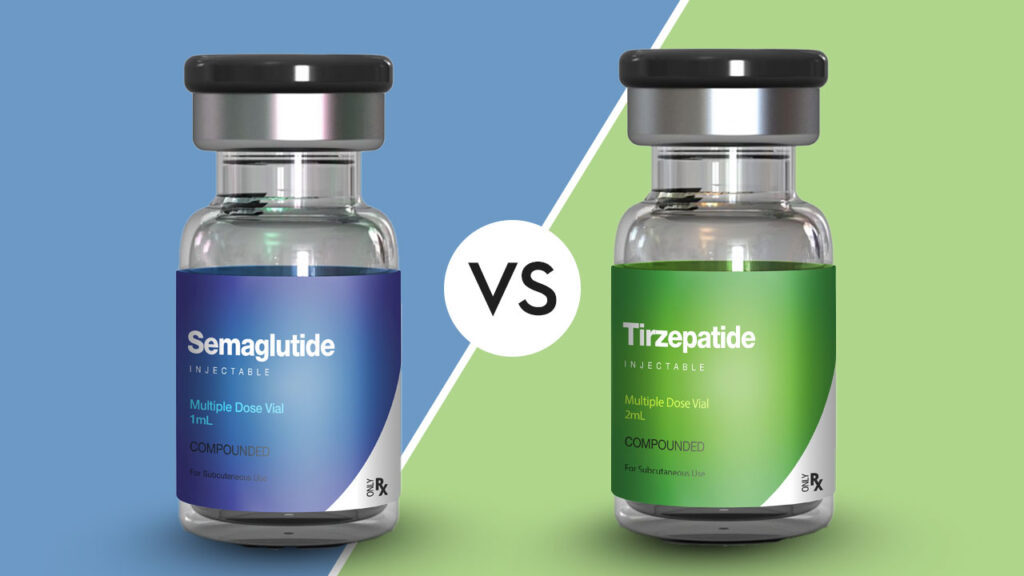

Semaglutide vs Tirzepatide: Which GLP-1 Medication Is Right for You? (2026 Guide)
Semaglutide (sold as Wegovy for weight loss, Ozempic for diabetes) and tirzepatide (Zepbound for weight loss, Mounjaro for diabetes) are the two most-prescribed GLP-1 receptor agonist medications in the United States. Both were approved by the FDA for chronic weight management within the last several years. Both produce clinically meaningful weight loss for most patients. But they are not identical — and one may fit your specific situation better than the other. This guide is a practical 2026 comparison of semaglutide versus tirzepatide across mechanism, real-world weight loss, side effects, cost, insurance coverage, and how a legitimate medically supervised GLP-1 program works. Comparison Point Semaglutide (Wegovy) Tirzepatide (Zepbound) Mechanism GLP-1 receptor agonist Dual GLP-1 + GIP receptor agonist Average weight loss at 68-72 weeks ~15% of starting body weight ~20-22% of starting body weight Dosing schedule Weekly subcutaneous injection Weekly subcutaneous injection Titration timeline to target dose ~16 weeks ~20 weeks Most common side effects Nausea, constipation, fatigue Nausea, diarrhea, fatigue Manufacturer Novo Nordisk Eli Lilly Typical 2026 cash-pay monthly cost $550-$1,300 $650-$1,300 Head-to-head comparison of semaglutide and tirzepatide for adult weight management.Mechanism: What Each Medication Actually DoesBoth medications mimic gut hormones that regulate hunger and blood sugar. But they engage different receptors:Semaglutide — single-receptor GLP-1 agonistSemaglutide activates the glucagon-like peptide-1 (GLP-1) receptor. In practice this slows gastric emptying so food stays in your stomach longer, reduces appetite via signals to the hypothalamus in the brain, and improves insulin sensitivity. The net effect is that you feel full sooner, feel full longer, and think about food less often. Randomized clinical trials show approximately 15 percent average weight loss at 68 weeks for adults with obesity taking semaglutide at target dose.Tirzepatide — dual GLP-1 and GIP agonistTirzepatide activates the GLP-1 receptor and the glucose-dependent insulinotropic polypeptide (GIP) receptor simultaneously. The addition of GIP appears to produce more efficient fat oxidation and additional appetite suppression beyond what GLP-1 alone provides. Randomized clinical trials (SURMOUNT-1) show approximately 20 to 22 percent average weight loss at 72 weeks for adults with obesity taking tirzepatide at the highest approved dose. This is the largest weight-loss effect seen with any weight-loss medication to date.How Much Weight Will You Actually Lose?The trial averages are useful reference points, but real-world weight loss varies widely by patient. Factors that predict better weight loss on either medication: Higher starting BMI — more weight to lose typically means more absolute pounds lost Consistent adherence — missing doses meaningfully reduces total weight loss Reaching target dose — patients who can only tolerate low doses lose less than those who reach the highest approved dose Behavioral changes alongside — the medications work best paired with modest protein-focused nutrition changes and any level of consistent resistance training Starting age — younger metabolisms respond somewhat more briskly, but adults across the age range can lose significant weight Roughly 30 to 40 percent of tirzepatide patients at the highest dose achieve 25 percent or greater weight loss — a magnitude comparable to bariatric surgery outcomes in some patients. Semaglutide produces this level of loss less frequently but is still transformative for most adherent patients. Neither medication produces overnight results — expect a 4 to 6 month curve of progressive loss.Side Effects: What to Expect in the First 8 WeeksBoth medications share a similar side-effect profile driven by their shared GLP-1 mechanism. Roughly 40 to 60 percent of patients experience at least mild gastrointestinal side effects during initial dose titration: Nausea — the most common side effect. Typically mild-to-moderate, worst in the 2 to 3 days after each weekly injection. Improves as your body adapts. Constipation (semaglutide) or diarrhea (tirzepatide) — opposite tendencies. Semaglutide slows GI motility more; tirzepatide can be more variable. Fatigue — particularly during rapid weight-loss phase; usually resolves within a few weeks of steady dose. Reduced alcohol tolerance — many patients report feeling drunk faster; reasonable to reduce intake. Injection-site reactions — occasional mild redness or itching that resolves within 1 to 2 days. Serious side effects are uncommon but real: pancreatitis (rare but reported), gallbladder issues (rapid weight loss increases gallstone risk), and thyroid concerns in patients with a family history of medullary thyroid cancer or MEN 2 syndrome (contraindicated). A legitimate GLP-1 program screens for these risks before prescribing and monitors bloodwork on schedule.Which One Should You Take? Practical Decision FrameworkTirzepatide is generally the better choice when: Your BMI is 35+ and you want maximum weight-loss magnitude You have type 2 diabetes and need glucose control alongside weight loss Prior GLP-1 attempts (semaglutide, liraglutide) produced disappointing results You can afford the slightly higher monthly cost Semaglutide is generally the better choice when: Your BMI is 27-32 and you need moderate weight loss Insurance covers semaglutide but not tirzepatide You have a strong personal reason to avoid the diarrhea tendency of tirzepatide Longer-term safety data matters to you — semaglutide has been in wider use longer Both medications have similar contraindications and are prescribed under similar monitoring protocols. A supervised program will discuss both, verify no contraindications apply to you, and pick the medication that fits your insurance coverage, starting weight, and personal preferences.Cost and Insurance Coverage in 2026Insurance coverage for GLP-1 medications for weight loss (as opposed to diabetes) has expanded but remains inconsistent. In 2026, roughly 30 to 45 percent of commercial plans cover Wegovy or Zepbound for weight loss with prior authorization; the remainder cover neither, or cover them only for the diabetes indications (Ozempic, Mounjaro). Medicare Part D still does not cover any GLP-1 for weight loss.Cash-pay options in 2026: Manufacturer copay cards — Novo Nordisk (semaglutide) and Eli Lilly (tirzepatide) run varying assistance programs; check the manufacturer websites for current terms Compounded semaglutide / tirzepatide — typically $250-$500/month at legitimate compounding pharmacies. The FDA has flagged concerns about non-FDA-approved compounded versions; verify your pharmacy is a licensed compounding pharmacy and that the medication is bio-identical, not a research-grade substitute Brand-name cash pay — approximately $1,000-$1,300/month for Wegovy or Zepbound direct from pharmacy Direct-from-manufacturer programs — Lilly
Semaglutide vs Tirzepatide: Which GLP-1 Medication Is Right for You? (2026 Guide) Read More »